Why Settle For Less_A Short Introduction to Anarchy & Total Liberation pdf
From back cover:
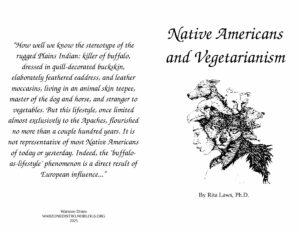
“How well we know the stereotype of the rugged Plains Indian: killer of buffalo, dressed in quill-decorated buckskin, elaborately feathered eaddress, and leather moccasins, living in an animal skin teepee, master of the dog and horse, and stranger to vegetables. But this lifestyle, once limited almost exclusively to the Apaches, flourished no more than a couple hundred years. It is not representative of most Native Americans of today or yesterday. Indeed, the “buffalo-as-lifestyle” phenomenon is a direct result of European influence…”
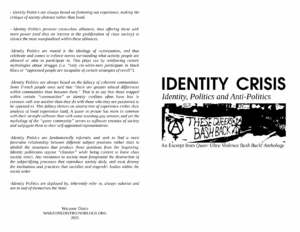
This text was retrieved from Bash Back! is Dead; Bash Back Forever! which is part of a larger anthology called Queer Ultraviolence. We find these texts to be an exceptionally valuable contribution to queer nihilist theory and practice, and so we felt compelled to make this particular text more accessible as a stand alone zine. In our opinion, the problem of identitarianism embarrassingly continues to plaque the anarchist movement (or whats left of it) even today as we publish this zine. As a queer nihilist project ourselves, we whole-heartedly relate to the authors perspective and find tremendous affinity with queerness as a lifesstyle of negation rather than a mere academic politic.

A few words before you start reading this fanzine here. First, let me briefly explain how I came up with the idea to address the question: Is Straight Edge political? I myself have been living drug-free for several years and use Straight Edge (or sxe) as the proper name for my life. The subculture often teaches me that the decision to live sober or sxe is a deeply personal one and often comes from a blunt “I’m better than you because I’m sober” and often goes along with the stereotype of the caveman who doesn’t consume but instead lifts weights endlessly and hits on other people at hardcore shows. Often this cliché may be true, and I often wish that this would change, as I see that in addition to self-optimisation, there are often many more layers to which Straight Edge can be applied. I often move in anti-fascist spaces in my spare time, and from a left-wing perspective, this zine is also written – as a kind of straight edge intersectionalism. From this perspective i tried to look on different topics like consumer criticism, sex or animal right.
This zine is made by xstreunerzeckex in april 2025 @xstreunerzeckex
From back cover:
“Those who still say that technology is “neutral,” “merely a tool,” have not yet begun to consider what is involved…Today we experience control as a steady reduction of our contact with the living world, a speeded-up Information Age emptyness drained by computerization and poisoned by the dead, domesticating imperialism of high-tech method. Never before have people been so infantalized, made so dependant on the machine for everything; as the earth rapidly approaches its extinction due to technology, our souls are shrunk and flattened by its pervasive rule. Any sense of wholeness and freedom can only return by the undoing of the massive division of labour at the heart of technological progress. This is the liberatory project in all its depth.”

From back cover:
What is a political label or identity if not just another number within a sea of political categories?
In moving from politics to anarchy, one actualizes revolt beyond the realm of theory. Language itself often fails to capture the fluidity of life in motion – the transformation of one’s desire for freedom into material action.
To refuse both intoxication culture and the collective normalization of human supremacy is to rewild an internalized domestication responsible for determining one’s view and treatment of others. Without the guidance of politicians or patience for any future revolution, total liberation means obtaining freedom here and now – led by a burning desire to destroy the immediate ideological mechanisms of one’s confinement.
The present is all we have.
Even without hope we continue to fight.
We weaponize our minds and bodies against all cages – including those designed to subordinate our perception of reality.
We know that no authority can ever give us freedom – so we create our own by reclaiming our lives.
Without taking action, words become nothing more than empty political rhetoric in the graveyard of history.

A zine that explores an anti-authoritarian overlap between straight edge and anarchism by exploring both the origins of the straight edge movement and the history of intoxication culture.
Out of Step With the World_Exploring Straight Edge as Anarchist Praxis pdf
Out-of-Step-With-the-World_Explorando-Straight-Edge-como-Praxis-Anarquista ESP pdf

From back cover:
“The eating disorder recovery industry is a potent example of how human supremacy perpetuates harm and immense suffering. Have you ever heard anyone say they cannot be vegan because they are in recovery from an eating disorder? It is a common refrain foisted upon us by practitioners and institutions that force their subjects to view individuals with vastly different morphologies as commodities rather than as individuals who an alienating and oppressive global food system has likewise harmed. The recovery narrative itself is a fantasy when it is seemingly impossible to escape a context of imposed power that tries to force us into becoming as small, manageable, and legible as possible by prescribing rigid identities and modalities. Rather than viewing them as neutral sources of food, we should develop compassion for and solidarity with the animals who, like ourselves, are repeatedly abused by profit-driven food systems and psychiatric institutions that only serve the interests of those who hold power.”
Disorderly Conduct_Veganism, Eating Disorders, and Captivity pdf

From back cover:
“The idea of community is held in such high regard by anarchists that it’s eerily reminiscent of USA liberals paying fealty to the “sacred ground” of their nation’s capitol. Community is something consecrated and unassailable to anarchists. It’s the bond that binds us to our fellow true Against Community Building believers. It gives us belonging, direction, purpose, safety, all those good things.
But does it really?…”
“Community always seems to be the spark that ignites an inferno of hierarchy and domination. So much horrific oppression and death has been justified in the age of Leviathan by attaching it to “the good of the community”. I’ve seen so many people, including anarchists, sweep all manner of abuses under the rug in a desperate attempt to “protect the integrity of the community”. Somehow the community is always put before the people who inhabit it, as if a precarious eidolon drawn from thin air and held together by nothing but collective resolve is more sacred than life itself.”

“We are responsible for the burning of Two Hana Bank ATM machines, the Hana Bank office building, a capitalist-owned advertising videotron, and a motor vehicle belonging to the Indonesian National Army. The arson occurred after a space occupation carried out by demonstrators in the aftermath of a demonstration against the passage of the Indonesian National Army Law (TNI law), the arson occurred in Bandung, West Java on Friday night 21/03/2025.”

From back cover:
“…majoritarianism of any sort means the repression of individual liberties and the curtailment of direct action in favor of deferred decision-making…Anarchists believe in unmediated relations between free individuals, the absence of any coercive or alienating forces in societies, and an unquestionable, universal right to self- determination. Those beliefs lead to many different visions of the world, but when genuinely held they will never lead to democracy. Even “direct democracy” demands surrender to the status quo that produces a hierarchy of group over individual, thus separating us from our desires and our desires from their unfettered realization in direct action. Any who would give up these principles should also give up the name “anarchist”— perhaps in favor of “libertarian.”


From back cover:
“Esta revista contiene una colección de textos veganos aportados por anarconihilistas de todo el mundo. Después de mantener conversaciones sobre nihilismo, anarquía antiespecismo y veganismo, todxs lxs autorxs de estos textos hemos decidido recopilar nuestros escritos en un fanzine multilingüe no sólo como expresión de solidaridad global, sino también como una forma de hacer accesibles al mundo las ideas anarquistas antiespecistas. Estas palabras, escritas con el rechazo a ser silenciadas por las leyes y los muros de las prisiones, representan un fuego salvaje que arde a través de las fronteras hacia cada ciudad…
Viva la liberación total”
(English translation)
This journal contains within a collection of vegan texts contributed by anarcho-nihilists from across the globe. After having conversations about nihilism, anti-civ anarchy and veganism, we, the authors of these texts have all decided to compile our writing into a multi-language zine not only as an expression of global solidarity, but also as a way to make anti-speciesist anarchist ideas accessible to the world. These words, written with the refusal to be silenced by laws and prison walls, represent a wildfire that burns through borders toward every city….
Long live total liberation!
Vegan Wild_An International Anarchist Journal of Total Liberation pdf
Vegan Wild_An International Anarchist Journal of Total Liberation_English Version pdf

From back cover:
“In response to modern day hunters who call themselves “green” or “primitive” or “anti-civ anarchists”, they are an example of how humans are inherently violent, with each other and with other species, ether through war or terrorism, and they usually focus on the weaker. As for the animals, most of them don’t and can not defend themselves from the hunter. Hunting is a form of terrorism, that humans, past and present, attempt to justify as being “necessary” for survival reasons – grown men and women killing or beating the shit out of the innocent.”
From back cover:
“The foundations of colonial genocide bear the stench of a long and protracted alcohol induced nightmare — nearly every indigenous culture the Europeans encountered was destroyed by European alcohol and disease. The spreading of firewater among indigenous populations of North America went hand-in-hand with the distribution of lethal smallpox-infested blankets. Many of these cultures, without the experience of thousands of years of civilized alcoholism to draw upon, were even more subject than the Europeans to the ravages of “the civilized brew.” Between alcohol, disease, commerce, and guns, most of them were quickly and utterly destroyed. This process was not unique to North America — it was repeated throughout the world in every European colonial endeavor. While the drug of choice varied (sometimes it was opium, for example, as in the “Opium Wars” Great Britain waged to control China), alcohol was judged in many countries to be the most socially-acceptable tool of pacification.”

Various writings by Lint Lobotomy covering a wide range of topics from veganism, straight edge and anti-civilization!

“Memory Loss” presents a history of the French group CLODO, which attacked and sabotaged computers in the 1980s. The zine contains a timeline of action, two communiques, and an interview of the group. Along with these items, there is a helpful introduction which contextualizes the group and its activities and situations them in relation to other anti-technology groups. The zines comes at a good time, coinciding with the release of a new film titled Machines in Flames that documents the group.
From back cover:
“Anti-civ anarchists attempting to ground their reasoning for hunting in primal human behavior are being self-contradictory. Surrendering one’s innate primal mutualism to anthropocentric supremacy grounded in moral and ethical ethos manifests in human incursions dominating and even killing other wild life. All wild animals live within a natural range, for example other great apes. They don’t naturally invade, conquer and colonize all of earth. Accepting civilization’s anthropocentric domination, as in hunting, is accomplished via indoctrinated moral conditioning, and is as much an authentic primal desire as that of a child to kill a rabbit and eat its raw tissues instead of picking and eating berries, mushrooms and nuts.”
Absurd, Disingenuous Rationalizations of Ranting Humancentric Anarchists pdf

This interview between Warzone Distro & Guta – one of the organizers of EININPAACF or Encuentro Internacional de Practicas Anarquicas y Antiauthoritarias Contra las Fronteras, which in english translates to annual international gathering of anarchist and anti-authoritarian practices against borders – took place a few days before and after the event. This event which took place January 25 – 27 in Tijuana, Mexico, reflects a new emergence of individualist, anarcho-nihilist perspectives influenced not only by the current techno-industrial world in general, but also by the perceived failings of leftism experienced by anarchists living in so-called mexico.
From back cover:
“We are taught since early childhood that everything in the world exists in a food chain as a “resource” to be consumed by those higher up the chain and concurrently as the consumer of “resources” that are lower in this predatory hierarchy. We are also told that life in the wild is hungry, fraught with mortal danger and that civilization has spared us a short and brutish existence. As children, we thus come to believe that life in civilization is good for us, in fact even indispensable for our very survival…”
“…Since civilization is rooted in the appropriation of food and “natural resources” as well as of slave labour (dogs, horses, cows, women, miners, farmers, et al), all of our institutions today inadvertently cater to these constructs and the needs that have been generated by this monocultural perspective. That is why every contemporary institution or company has a department of “human resources” and is thereby linked to managing, killing, and protecting the ownership of “natural” and other resources.
Hence, everything, including humans, became “professionalized” and thus divided into gendered, ethnic, racial, and other categories specializing in specific spheres of labour thereby falling into defined niches of the “food chain”. Language reflects these categories and naturalizes oppression. For instance, in European languages, humanity is conflated with maleness. The word “woman” allows us to unconsciously accept that womanhood entails an aspect of humanness which erases our (female) animality thereby excluding the depersonified nonhuman animals from the privileges accorded to some animals (a small group of primates) by belonging to “humanity”. Moreover, by separating these categories of humanity, animality, femaleness, maleness, race, ethnicity, et al., language veils the racist, speciesist, and patriarchal essence of civilization where human and nonhuman women have been relegated to a class specializing in the production of human and nonhuman resources.”
From back cover:
“Vega is a southern born west coast anarcho-nihilist. Their identity is found in subtle notes throughout their prose. Being a constructed element of self, their identity has been constructed through a warped vision of what’s in front of you momentarily. Nothing written can capture that which is Vega, so nothing written will really do. If you knew them you would know. And that’s all there is. One might label them as disabled or a drug user. Another might label them as another construct to convey emotion. What resonates here is what matters. Leave the rest for someone else.”
Grotesque and Tranquility_A Queer Nihilists Compilation of Poetry pdf
From back cover:
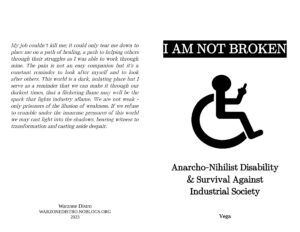
“My job couldn’t kill me, it could only tear me down to place me on a path of healing, a path to helping others through their struggles as I was able to work through mine. The pain is not an easy companion but it’s a constant reminder to look after myself and to look after others. This world is a dark, isolating place but I serve as a reminder that we can make it through our darkest times, that a flickering flame may well be the spark that lights industry aflame. We are not weak, only prisoner of the illusion of weakness. If we refuse to crumble under the immense pressures of this world we may cast light into the shadows, bearing witness to transformation and casting aside despair.”
I Am Not Broken_Anarcho Nihilist Disability and Survival Against Industrial Society pdf
From back cover:
“Of course, regardless of how myself or anyone else feels about industrial collapse, and whether or not people want to believe we can either prevent or accelerate it, industrial collapse is already happening, and has been for quite some time. Perhaps the reason why it’s gone unnoticed is either due to denial, or because the rate at which it’s collapsing doesn’t resemble a single, crumbling tower that quickly turns into ash and smoke. That is because something as large and socially complex as industrial society doesn’t break down all at once, but instead decomposes at different points and at different times. It is commonly understood as collapse due to an acknowledgement that as the natural resources needed to sustain industrial society are depleted, the points of decomposition break down beyond repair.”
“I can imagine a couple possible reasons why industrial collapse doesn’t cross the minds of many. One reason could be the socialized mentality of immortality driven by human supremacist arrogance. There are many people today – including leftists – who continue to put faith in science and technology as the saviors of life, and as a primary response to ecological disasters. At the root of this unwaivering faith is a refusal to acknowledge how science and technology have re-defined life by securing human-centric control over the wild. Science and technology, regardless of their greening continue to be the alphabet of industrialization – expanding power and influence through a language of increased alienation and ecological extinction. From military empowerment through the expansive production of weapons of mass destruction, to the tireless gaze of increased State surveilance over the population, science and technology never sleep. And as industrialization continues to absorb what remains of the wild world, the relationship to wildness erodes on both an individual and societal level.”
Oblivion_Anarchy & the Collapse of Industrial Civilization pdf
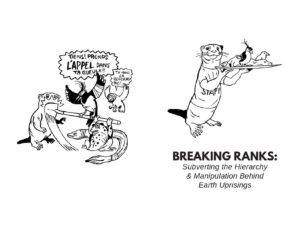
“At this point, many anarchists in the US are already familiar with how tiqqunists destroyed the struggle at the Notre-Dame-des-Landes ZAD (Zone to Defend) occupation in France in favor of legalization and property ownership [1]. The narrative that this tragic conclusion to the decade-long struggle was actually a victory has been regurgitated ad nauseum by tiqqunist platforms in the US. For example, Ill Will Edition’s “The Strategy of Composition” is about applying this “strategy” to the struggle against Cop City: “The territorial phase of the struggle took shape gradually over a ten year period from 2008 until its eventual victory in 2018, and has since continued to nourish collective experiments on the Zone to this day”.
The next initiative of the ex-ZAD tiqqunists failed when those familiar with their methods of recuperation and authoritarianism sabotaged their attempts to take the vanguard of a ZAD located in Carnet. Comrades from the Carnet ZAD along with those from several other struggles co-authored a statement outlining the attempts at cooptation and centralization, which we included as an appendix in this zine as an inspiring example of anti-authoritarians making a struggle inhospitable to authoritarian power plays.
After this failed attempt at bringing autonomous and decentralized struggles under their control, the tiqqunists of the ex-ZAD moved on to their most recent initiative: Soulevements de la Terre (which translates to “Earth Uprisings”, aka SDT). Exploiting the momentum of groups like Extinction Rebellion, and the broader youth climate movement, SDT offers activists a militant alternative to civil disobedience: mass demo-actions against ecologically destructive targets. While these have included some notable acts of sabotage, it is important to notice that their actions are often just as limited to symbolic engagement as those of the non-violent environmentalists, designed to promote the organization through sensationalism aimed at capturing the attention of the mass media. A recent mass action against a water basin on March 25th resulted in serious injuries, prompting anarchists to more broadly articulate warnings about this organization’s political foundations and motivations. The authors of these texts are careful to critique the centralized forces behind SDT and not the participants, clarifying that they are not telling anyone to stop attending SDT actions, but rather encouraging them to maintain a critical eye towards how the actions are organized and what they are being asked to do.
Predictably, the two primary tiqqunist platforms in the US have championed Soulevements de la Terre: Ill Will Editions republishes their propaganda, and Inhabit does the same while proclaiming that their actions are “an exhilarating example of all that has gone well in the movement up until this point and chart a path forward we hope others can imagine walking themselves”. [2] The following three critiques from anti-authoritarians in France are therefore also relevant to our context. These texts focus on manipulative and vanguardist practices, the spectacularization of the struggle, and the use of radicals as shock-troops. The goal of these texts, and our translation effort, is to increase familiarity with these deceptive practices and strategies, an essential first step towards sabotaging the influence and control of any similar attempts in our own neck of the woods.”
BREAKING RANKS_Subverting the Hierarchy & Manipulation Behind Earth Uprisings pdf

From back cover:
“Despite the absorption of veganism by the capitalist market – a process that admittingly reinforces pre-existing divisions across class and racial lines – a vegan lifestyle taken to its logical conclusion is fundamentally anti-capitalist and anti-colonial. By (re)acknowledging sentience and personalities within the bodies of colonized (animal) subjects, a vegan lifestyle rejects authoritarian relationships based on disrespect for the bodily autonomy of those whose lives have been re-purposed for human supremacist consumption.
This small collection of shared experiences, while reflective of a larger anti-colonial struggle, highlights the inclusion of an anti-speciesist, animal liberation.”
Veganism as Anti-Colonial Praxis_A Collection of Indigenous Vegan Perspectives pdf
From back cover:
“…But I am also a vegan, not because I wish to limit my consumption of animals but because I desire to expand it! I still consume animals, but not as food, not as mere commodities alienated from me by capitalist production and given silly nicknames, such as ‘pork’ and ‘beef’, in order to distract whatever conscience they falsely believe that I am possessed by. I devour animals as individuals; no longer tethered to the service of Man, I am free to act without his prejudices, so I no longer refuse to look at the lesser animals, but instead gaze upon them, scanning every detail and making frequent observations, to see what pleasures I can take from them! I now take pleasure in the pleasure of animals, not because I am doing what is ‘right’, but because I seize their joy for myself and make it my property; I milk delight from the freed cattle, leaping gleefully through the fields of the sanctuary; I crack open the contentedness of the chicken as it pecks seeds from my hand; a pampered dog, descendant of a once ferocious wolf, and I devour hungrily the companionship that we share together. Animals can offer me many things that other ‘humans’ can not; new ways of communicating, of perceiving the world around me; the unique, aesthetic pleasure of their appearance, especially the details that one only notices with familiarity, and the mystery, intrigue and exciting unexpectedness of beings so morphologically and genetically different from myself! Just as a plate with greater variety is far more delicious, relationships with a greater diversity of beings is far more delectable for me and I will not limit myself to consuming only relations with Man!”

From back cover:
““To adopt a form of veganism – a plant-based lifestyle and ethics – that acknowledges, is based upon, and celebrates Te Ao Māori, is a break from the dominant and from the status quo and but also an act of decolonialism. It is a way to reclaim sovereignty and exercise individual choice.
And finally, it is a means by which collective power and community may be built; this is evident in the existence of online forums and comment threads on Māori-based vegan and plant- based social media accounts.
Discussions regarding the intersections of vegan ethics, Indigeneity and Māoritanga and ideas about plant-based kai, and kaimangatanga are already occurring within Māori families and communities and the outcomes and possiblities that arise from this kōrero are potent and unique. There are karakia or prayers that refer to the sustenance provided by plant-based kai, and waiata (songs) which are based upon the care and protection of animal species and the environment. There are also resources and recipes for ‘veganizing’ traditional foods such as hangi (food cooked in the earth), and boil-up (a popular meat-based dish which usually includes plants such as pūha [sowthistle], potatoes, and watercress).”
Kaimangatanga_ Maori Perspectives on Veganism and Plant-based Kai pdf

From back cover:
“The anti-authoritarian relationship with non-human animals (and the earth) combined with clandestine attack against industrial society can be seen throughout history. Past and present, many anarchists not only maintain a vegan lifestyle as a rejection of hierarchy in their relationships to non-human animals, but also recognize the necessity for destroying civilization itself.
This zine was created with the intention of illustrating the relationship between veganism, individualist anarchy and insurrectionary attack by highlighting a few of the many groups and cells that turned anger into action.”

From back cover:
“Veganism, like anarchy, isn’t a system; it’s an individual praxis of abstention and individual resistance against consumerist violence and civilization-induced destruction. Veganism is the individual anti-speciesist refusal to take part in all forms of exploitation and systematic extermination…
…Vegetarianism is part of my egoist self-affirmation as I strive towards veganism as part of my own individualist liberation struggle, evicting the social constructs and herd mentalities that haunt the mind.”
The Intersections Between Anti-Speciesism, Anti-Civilization & Individualist Anarchy pdf

From back cover:
“…And eventually, I came to believe that the problem had never been with my brain – at least, not in the way I had been taught. Without the pills, I was not ‘chemically imbalanced’. I was traumatized, yes – both on a personal level and on a societal level – but I was not broken, sick, or damaged.”

From back cover:
“I remain an embodiment of insubordination, the fluidity of unbridled emotions, the nihilist poetry of a tsunami in flux. I do not sympathize with conforming to behavorial servitude in order to preserve the general peace of subordinating civility! Rather than pacify my outrage or silence my despair, I have put all of society’s shame-on-mes and peer pressures to rest in coffins lined up for a bonfire in my head. And during their incineration, I will look up to the stars with a smile of admiration, for they are a dazzling beauty beyond the reach of civilized governance.”

From back cover:
“An insurrectionary moment is a qualitative leap, a negation of existing social relations on a whole other level. From there ugly things can happen, beautiful things also. What has changed is our power to make things happen…
…There are those invested in the politics of insurrection, working in the tradition of the authoritarian Blanqui. An Eric Hazan and his Factory (producing theory for the aspiring intellectuals) have measures to implement, the (not so) Invisible Committee has the strategy (tested before and failed) and its (not so) Imaginary Party has the cadre (wannabe politicians) and the infrastructure (thanks to wealthy lefty benefactors). Cynical people willing to manipulate others to realize their authoritarian projects. Nothing new there. It’s up to persons with anarchist sensitivities to recognize these intentions and subvert them (if they care enough). Admittedly, a lot of the radical milieu got seduced by their mystifications….
…I concede this {Desertion} is a theory we are presented with. But more than being a “whole way of seeing” (as Bellamy defines it); a theory is based on generalizations and abstractions. At the best of times, a theory can provide us with tools to find a more conscious relation with what is surrounding us. Mostly though, theory produces crude categories that are imposed on complex beings and dynamic realities; reductions that are counter-productive to understanding. Moreover, a theory that is not understood as having its limitations and shortcomings (and thus, as being a peculiar way of seeing), but instead as forming a complete picture produces its own mystifications and idealizations.”
Handful of Objections_A Response to a Proposal for Desertion pdf

From back cover:
“If I am thoroughly an egoist, then I recognize the ego of others and the desire of that ego to not be controlled or dominated. I own nobody, and nobody owns me. This social relationship does not constitute a form of politics. Politics implies social governance guided by an external authority. My lifestyle is an anti-politics rejecting all anthropocentric power and authority constructed to govern my social interactions with other animals. My refusal to view nonhuman animals as “food” for consumption can easily be understood as a primal expression of this anti-authoritarian lifestyle.”
Egoist Vegan_Some Thoughts on an Individualist Animal Liberation pdf

From back cover:
“I am sure there will be some who will find this text redundant – another critique of identity. Fair enough. But allow me to be clear: I write this with the intent of further agitating identity politics by confronting the idea that Race is sacred and/or above criticism. My anti-fascist, anti-racist views recognize Race as nothing more than a social construct used to govern individuality. Despite attempts to personalize it with glory, cultural value, and meaning, Race continues to be just one of many phantoms woven into the fabric of social control and domination. My same desire to destroy white supremacy extends toward any and all racialized supremacist ideologies that attempt to take its place. So whether people call it “Post-Race Anarchy” or “Race Nihilism”, a critique of Race could be understood as a necessary re-wilding toward the rejection of civilized identity.”
Destroy Race Destroy Society_Another Diary of Mayhem and Race Nihilism pdf

From back cover:
“For me, post-left anarchy is synonymous with anti-left anarchy. The “post” in post-left anarchy does not represent a ‘new’ or evolved form of leftism – as some would claim with various contemporary anti-state communist and socialist projects. Rather I use the phrase post-left anarchy to merely express a present frame of mind distinct from a past experience of having identified and engaged with leftist thinking. And from this perspective, anti is synonymous with post because it accurately expresses the nature of my present existence – my desire for individualistic, feral freedom – as antagonistic toward the civilizing order of leftism. For me, post-left anarchy does not mean some sort of alignment or sympathy with right-wing politics – I am equally hostile toward nationalism, fascism, and all other conservative ideologies created in the name of preserving law and order. I recognize that both left and right wing ideologies are fundamentally collectivist, requiring the absorption of individual freedom in exchange for the uniformity of a republic. Both sides of the political spectrum integrate people into a binary interpretation of reality that ultimately maintains industrial society.”
From back cover:
“In the past several years, the question of gender has been taken up again and again by the anarchist milieu. And still few attempts amount to much more than a rehashing of old ideas. Most positions on gender remain within the constraints of one or more of the ideologies that have failed us already, mainly Marxist feminism, a watered down eco-feminism, or some sort of liberal “queer anarchism.” Present in all of these are the same problems we’ve howled against already: identity politics, representation, gender essentialism, reformism, and reproductive futurism. While we have no interest in offering another ideology in this discourse, we imagine that an escape route could be charted by asking the question that few will ask; by setting a course straight to the secret center of gendered life which all the ideological answers take for granted. We are speaking, of course, about Civilization itself.”
(Zine cover art and booklet format by Little Mouse Fun, http://www.littlemouse.fun/zines.html)
From back cover:
“The electioneering of hope and countless other political promises may captivate some, but not all. In the case of this text, I’m pointing out that some discover freedom in the total abandonment of positive politics including the “utopian future” tied to it like a carrot. For some, nihilism is the pursuit of creating moments of bliss here and now with the rubble of burned down slaughterhouses, the cartloads of retail theft, the spontaneous attacks against fascism and so on. Some nihilists do more than just look at the stars; some enjoy the night sky from the rooftops of squatted buildings, the sunrise from moving freight trains, or the thunderstorms during nighttime property destruction.”

Text from the zine:
“We must turn against society itself. Gender is a war against all of us, and for those who desire freedom, nothing short of the total eradication of gender will suffice. To those of us who wish to remove all the walls between each other instead of being alienated from each other (and ourselves) because of groupings we never chose, to those of us that wish to access all our potential doings, our potential to become anything instead of pacing within the limits of genders we know to be inadequate, we say: let’s destroy society, let’s destroy gender.”
Text from back cover:
“There are certain practices that exist in the ways in which self-proclaimed “radical trans” people and “anarcha-feminists” of certain activist subcultures have set into motion in response to the question of gender. These include consent zines/workshops, “trans 101”s, and call-outs of “fucked up” behavior internal to their subculture, in addition to dance parties and orgies. There is certainly nothing inherently *wrong* with any of these things, but if we take seriously the notion that we must destroy gender and all social relations of this society, there is clearly something lacking in the practice which only challenges gender at a level of language use and subcultural dynamics. If we abandon the leftist- activist model and accept the charge that “revolutionary movements do not spread by contamination, but by resonance” and writing that has further elaborated this thesis of an insurrectional music, we come to an understanding that there are at the very least a number of problems with thinking that these isolated methods alone could build a force to destroy gender.”
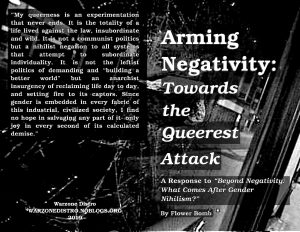
From back cover:
“My queerness is an experimentation that never ends. It is the totality of a life lived against the law, insubordinate and wild. It is not a communist politics but a nihilist negation to all systems that attempt to subordinate individuality. It is not the leftist politics of demanding and “building a better world” but an anarchist insurgency of reclaiming life day to day, and setting fire to its captors. Since gender is embedded in every fabric of this industrial, civilized society, I find no hope in salvaging any part of it only joy in every second of its calculated demise.”